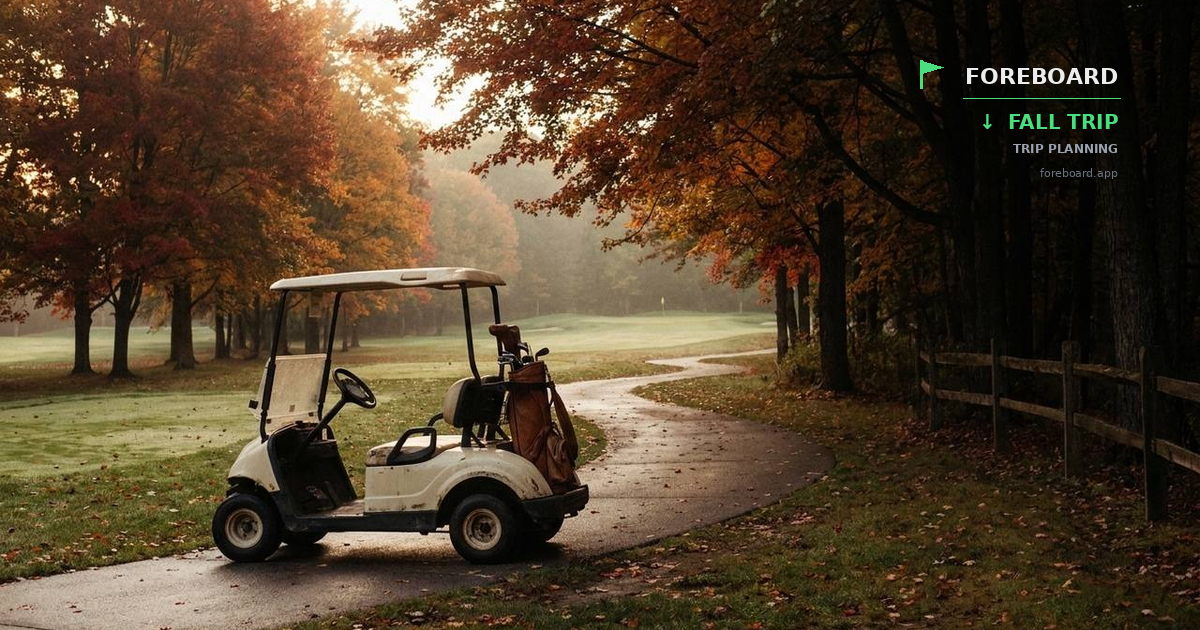
There's just something special about trips in the fall.
Summer trips don't have as many variables — work can be slower, the weather is on your side, and you probably have more golf to play afterwards. There might even be another trip or tournament looming.
Fall is different. Work is starting to gear up for the year-end push, the weather is starting to turn, the sun sets earlier, and it could be the last time the guys get together until spring.
The window is shorter than it feels
Depending on where you play, real golf weather has about 4–8 weeks left. Northeast and Midwest crews are looking at late September through mid-October before mornings get punishing. Mid-Atlantic gets an extra couple weeks. The South keeps going through Thanksgiving.
If you haven't picked a weekend yet, pick it this week. Late-fall stay-and-play packages disappear faster than summer ones because there's less inventory.
Best value is Sunday–Thursday. Most courses run their fall specials midweek, and the tee sheet has more flex than it did in June.
Pick a format that survives the weather
This is where fall trips can go sideways. You planned a full skins pot with 8 guys across 3 rounds, then Saturday's round gets cut to 12 holes because the wind picked up, the temperature dropped 20 degrees, and three of the guys are ready to call it a day. Now what?
Team formats hold up better than individual pots for exactly this reason. A Ryder Cup–style trip — best ball, high/low, team match play, team Nassau — keeps everyone in every round. Every match that got played counts for the team, and the guys who toughed out the last four holes in the wind get to feel it in the standings. Nobody's chasing a skins pot that never resolved.
The bookkeeping problem
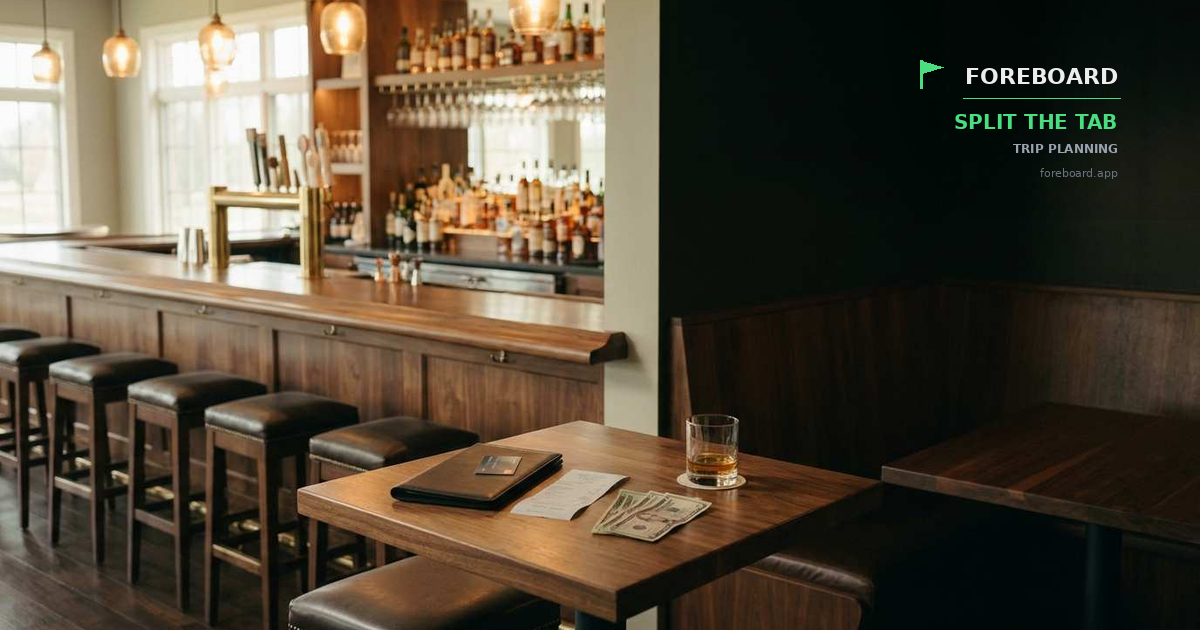
Here's what makes fall trips more of a pain to score than summer ones: variability. Three different courses, two different formats, one weather-shortened round, one guy who joined for two days and missed the third. Try tracking that on a bar napkin at 10pm.
ForeBoard handles it. Enter the players once, pick the format for each round, and the running team and individual leaderboards update themselves. Weather-shortened round? Enter what you played, don't enter what you didn't — the standings stay accurate. Guys who joined late or left early? Their point total reflects only the rounds they were in.
You put down the pencil, everyone can see the standings on their phone, and you aren't stuck doing the math at dinner.
What actually changes in October
The trip isn't just June with sweaters. A few things really do shift:
- Tee times matter more. Sunset in most of the northern US is around 6:30pm mid-October and dropping fast. If you want 18, you're teeing off by 1pm. Do the math backward from sunset before you book.
- Layers, not one jacket. 42 degrees at 7am becomes 68 by 2pm. Base layer, quarter-zip, vest, rain jacket — peel as the day goes.
- Extra gloves. Wet grass, cold hands, and a leather glove that never quite dries again. Two spares in the bag.
- Cart cover, or accept your fate. Rain in October isn't warm rain. If the forecast has any percent chance, bring the cover or agree on the rain-check policy up front.
Make it count
The last trip of the year deserves a proper close. Every good fall trip I've been on ends the same way:
- Settle the tab that night, not the next morning at the airport.
- Hand out the awards. Trophy, hat, cash envelope, high fives — doesn't matter, do the ceremony.
- Set next year's dates before you leave. Or at least start the conversation for the next trip. This is the one that matters — group texts about "what weekend works" die in February. Start the conversation now.
Planning your last trip? Score it on ForeBoard → Ryder Cup, Nassau, best-ball, skins — pick the format, ForeBoard handles the math. Free at any trip size, works in any browser, no accounts. My email is nathan@foreboard.app if you want to talk through how a specific trip might work.