Somebody at the nonprofit said, "You're running the golf outing this year." Maybe it was the executive director. Maybe it was the board chair, who plays in the outing every year and figured you'd be perfect for it. Maybe you volunteered before you fully understood what the role involved.
Now you're staring down a six-figure fundraising goal, a course you've never spoken to, a sponsorship pipeline you have to build from scratch, and a January-to-September timeline. You might not even golf.
This is the playbook. Six months out to settlement. Every step you need, in the order you need it. And one specific recommendation at the end for how to handle scoring without paying for software that costs more than half your sponsorships combined.
Why a scramble (and not something else)
Almost every charity golf event runs as a scramble — and there's a reason. The format works for the audience.
In a scramble, every player on a team (usually four) tees off, the team picks the best shot, and everyone plays from that spot. Repeat until the ball is in the hole. One team score per hole. The team with the lowest cumulative score wins.
Why this works for charity events specifically:
- Skill range is wide. Your sponsor's CFO who plays twice a year is paired with the avid 8-handicap from a member firm. In stroke play, that's miserable for the CFO. In a scramble, every player contributes when their shot is the best one — and they're never the reason the team fell apart.
- Pace is friendly. No one is searching the trees for their ball. If your drive went sideways, the team plays from someone else's fairway shot. Rounds finish in four hours, not six.
- The bar is low and the energy stays high. People are there for the cause, for their company's table, for the post-round drinks. The scramble keeps them in the game without grinding them down.
If your group is unusually competitive or skilled, a shamble (everyone tees off, team picks the best drive, then everyone plays their own ball from there) is a slightly more challenging variant. But for a true charity event with mixed skill, default to scramble.
Six months out: dates, course, budget
The unsexy three calls that make or break the event.
Lock the date. Best months in most regions are May, June, September, October — outside the worst heat and far from major holidays. Avoid the weekend of any major local event (your sponsors' calendars will be booked). Confirm with the course at least four to six months out. The best courses book up earlier than that for the prime weekday slots.
Negotiate the course package. A charity rate is reasonable to ask for, and most courses will offer one. The standard package includes greens fees, carts, range balls, a beverage cart, and a meal (lunch or post-round dinner). Get the per-player cost in writing. Confirm what's included in the rate — beverages on the course? Tip for the staff? Prizes? Sometimes a course will donate part of the package as their contribution.
Build the budget. Three buckets:
- Course costs. Per-player rate × expected players + any minimums.
- Event costs. Sponsor signs, hole signage, tee gifts, contest prizes, registration materials, printing.
- Net to cause. Total raised minus the two above. Set a target.
A useful rule of thumb: for a 100-player event at a mid-tier course, expect $80–$150 per player in course/event costs. Player fees and sponsorships need to clear that floor before you raise a dollar for the cause.
Set your registration price 1.5x to 2x the per-player course cost. Sponsorships are where the real money comes from.
Five to four months out: sponsorship strategy
Sponsorships are 60–80% of the gross for most charity scrambles. Treat this as the biggest single thing you do.
Standard tier structure:
- Presenting Sponsor ($10,000–$25,000+). One per event. Name on everything — banner, website, every email, branded carts if possible. Speaking slot at the post-round program. Usually a foursome or two included.
- Tournament Sponsor ($5,000–$10,000). Two or three per event. Major signage, named hole contests (Closest to Pin, Longest Drive), foursome included.
- Hole Sponsor ($500–$1,500). Eighteen available (one per hole). Sign at the tee box, mention in the program. Most attainable tier for smaller businesses.
- Cart Sponsor ($1,000–$2,500). Logo placard on every cart. High visibility.
- In-Kind Sponsor. Donates tee gifts, raffle prizes, food, or services in exchange for recognition. Often easier asks than cash.
Start outreach four months out. Your pitch is a one-page deck — event date, audience, cause, tier breakdown with benefits, and a deadline (usually six weeks before the event). Send personalized emails, not a mass blast. Follow up at two weeks and four weeks. Most sponsors say yes because someone they know asked them.
Make the ask easy. A boilerplate sponsorship agreement (one page, what they get and what they pay) makes the close fast. Offer to send their logo specs back to them so you can confirm before printing signage.
Track sponsors in a simple spreadsheet: company, contact, tier, status, amount, logo received, signage approved, payment received. The "logo received" column will save you a panicked call to the printer two weeks before the event.
Three to two months out: registration and marketing
Open registration two to three months out. The earlier you can lock player commitments, the better your sponsorship pitch ("We're at 60 players already, with 12 more confirmed") and the easier your day-of pairings.
Registration platforms. A handful of free options work well:
- Eventbrite. Free for free events; charges a small per-ticket fee for paid registration. Strong checkout flow and email tooling.
- Givebutter. Built for nonprofits. Donation-first, but handles event registration cleanly.
- A simple landing page on your existing site with a Stripe or PayPal link. Most lightweight option if you have a developer in your network.
You don't need tournament software at this stage. You need a registration tool. Most paid tournament platforms try to bundle registration, pairings, and scoring into one stack — but for a single annual event, splitting those is fine.
Pricing structure. Two tiers usually:
- Individual ($150–$300). You build them into a team.
- Foursome ($600–$1,200). Pre-arranged team registers together. Discount versus four individuals (incentivizes the bundle).
Marketing. Email your existing donor list, board members, and last year's player list. Most charity events draw 60–70% returning players. Your past sponsors are your strongest registration funnel.
Two weeks out: pairings, signage, day-of plan
The home stretch. This is where the disorganized events start to show.
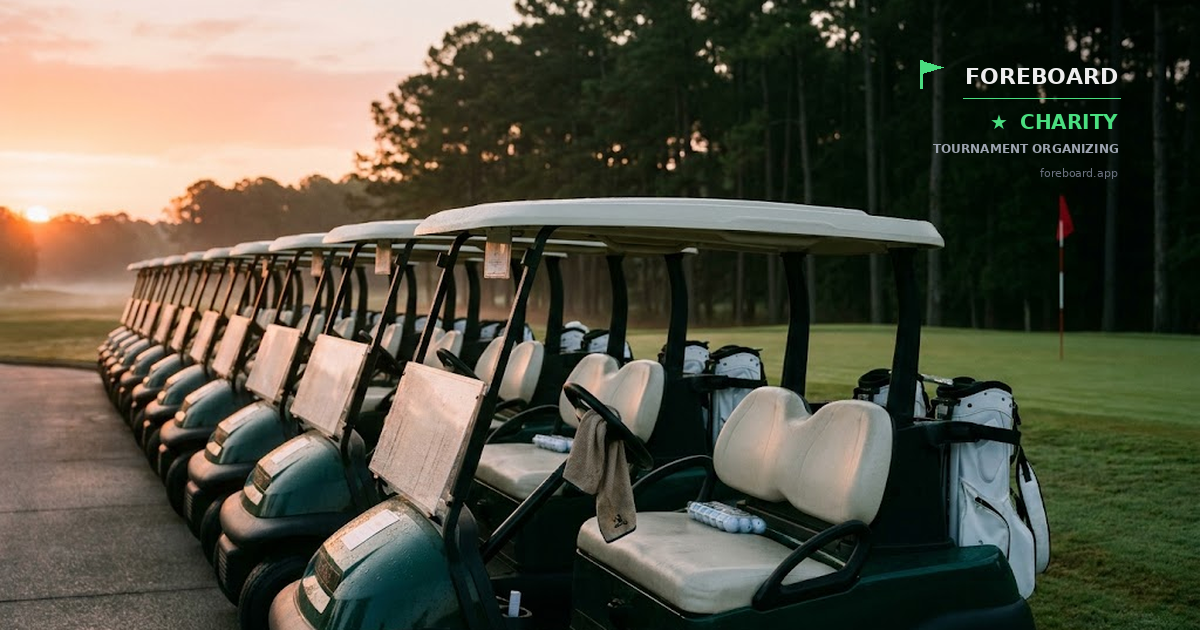
Pairings. If you're doing a shotgun start (every team tees off at the same time on a different hole), you need eighteen foursomes — or one team per hole. Most charity events run as a shotgun. Build pairings two weeks out so you can email cart cards and starting holes the week of.
Two ways to pair:
- Self-formed foursomes. Teams register together. Easiest for you. Some teams will register as twos or threes — fill those in with individual registrants.
- Mixed pairings. Organizer assigns players to teams to balance skill or to maximize cross-pollination (e.g., putting board members with major donors). More work, but more impactful for relationship-building events.
A simple cart card includes:
- Team name (sponsor name if relevant)
- All four players, hometown or company
- Starting hole
- Cart number
- A small thank-you and program reminder
Signage placement. Confirm with the course where you can place hole sponsor signs. Build a list with hole number, sponsor name, and confirm the signs have arrived. Walking each tee box the morning of with the signs in your trunk is the rookie mistake. Have signs delivered to the course three days early.
Contests. Standard set:
- Closest to Pin on each par 3 (four total). Tournament Sponsor often gets to put their logo on the contest.
- Longest Drive on a designated par 4 or 5. Same.
- Hole-in-One on one designated par 3. Usually backed by a third-party insurance product for prizes over $10K. Local car dealers sometimes sponsor a car for this; the insurance protects them.
- Putting contest on the practice green during registration. Optional but high-energy.
Day-of staffing. Volunteer roles:
- Registration table (2 people, 7am–9am).
- Range balls / driving range monitor (1 person, 7am–8:30am).
- Pin contest measurers (1 per contest hole, on call for two hours).
- Bag drop / cart loading (course usually handles, but worth confirming).
- Auction / raffle table (2 people, during lunch and at post-round program).
- Program emcee (1 person, usually the executive director or a board member).
Most volunteers come from your nonprofit's regular volunteer pool. Brief them once, in person if possible, at least a week before the event.
Day of: the run-of-show
Standard charity scramble runs like this:
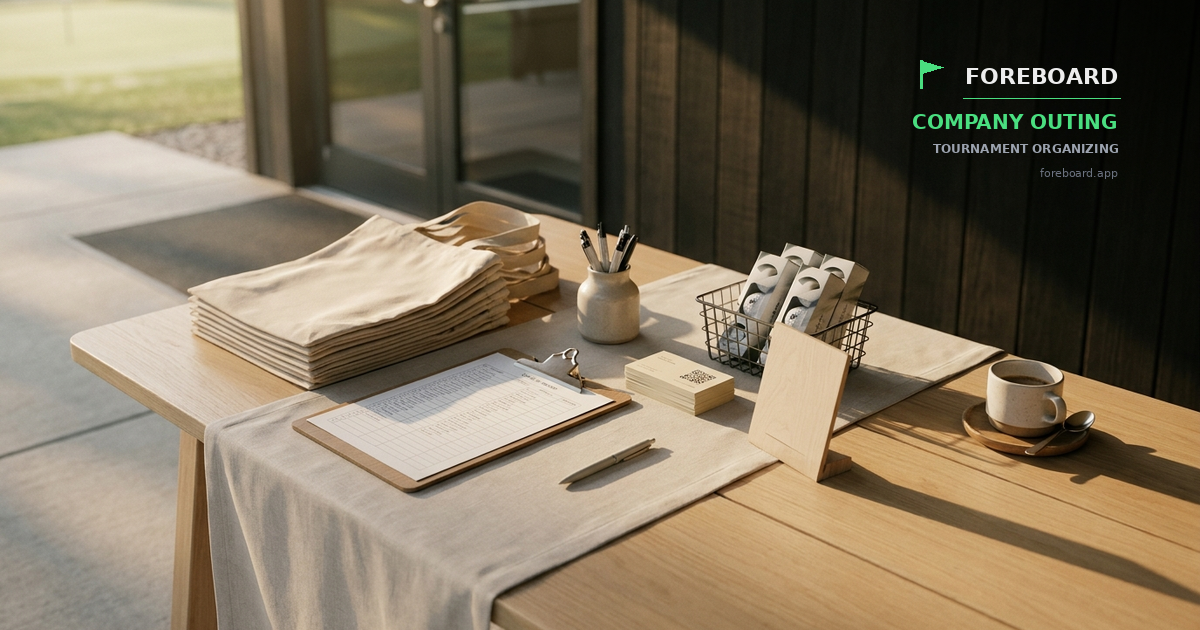
7:00am — 7:30am. Course staff arrives. You arrive with signs, signage placards, prizes, tee gifts, and registration materials. Set up the registration table. Distribute hole signs to the course staff for placement.
7:30am — 8:30am. Players arrive, check in at registration. Receive tee gifts (often a sleeve of balls, a hat, a divot tool — whatever your in-kind sponsors provided). Get directed to their cart and starting hole. Range opens, players warm up.
8:30am. Brief opening from the executive director or board chair. Two minutes. Thank the sponsors by name. Remind everyone where the contests are. Send them off.
8:45am — 9:00am. Shotgun start. Players are at their starting hole; horn blows; everyone tees off simultaneously.
9:00am — 1:00pm. Round in progress. You're now running logistics — making sure the beverage cart is on the course, the pin contest markers are being checked, and the lunch service is ready when teams start coming in. Walk the course if you can. Take photos.
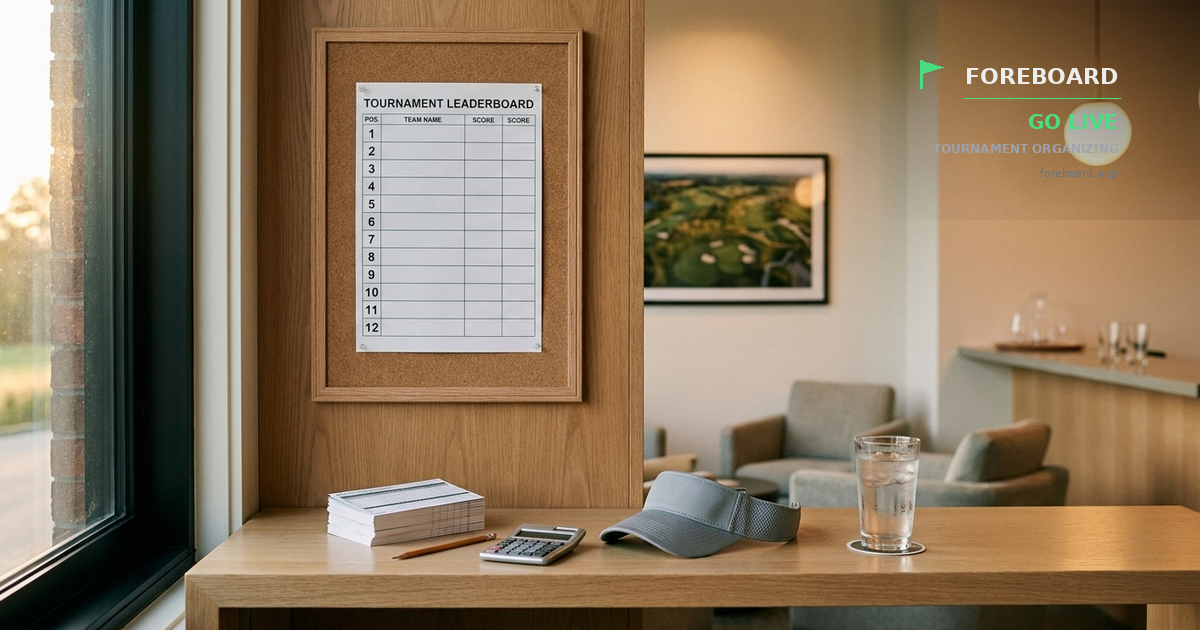
1:00pm — 2:00pm. Teams finish, drop scorecards, eat lunch. The leaderboard becomes the focal point. People want to know where they stand and who won the contests.
2:00pm — 3:00pm. Post-round program. Welcome, thank you, recognize sponsors, announce contest winners, announce overall team standings, announce the amount raised so far. Most events conclude with a raffle or auction. Keep it tight — 45 minutes max.
3:00pm. Players leave. You and three volunteers spend the next ninety minutes packing up signage, cleaning the registration area, and saying goodbye to course staff.
The scoring problem
Here's where most first-time organizers spend a fortune unnecessarily.
Paid tournament software — GolfGenius, Tourney Machine, BlueGolf, Golf Tournament Organizer — are professional-grade tools. They're built for clubs running 30+ events a year and major championship organizers, and they earn that price tag for that audience. For an annual charity event, the per-event fee is hard to justify: typical pricing is $300 to $1,500+ for a single event, depending on features. That's a real chunk of your net.
For one-off charity events, you don't need that level of tool. Your team turns in a scorecard at the end of the round. Someone tallies the team scores. The leaderboard goes on a whiteboard during lunch.
The problem is — without live scoring, players don't know how they're doing during the round. There's no in-round drama. Sponsors don't get the engagement boost of seeing their hole sponsorship on a live screen. The lunch leaderboard reveal is a one-time moment instead of a four-hour arc.
This is where free live leaderboard tools change the math. ForeBoard handles team scoring for scramble and shamble formats, live leaderboards on every player's phone, contest tracking (Closest to Pin, Longest Drive), and post-event results — for $0 per event. No per-player fee, no setup fee, no annual contract. Built specifically for groups that want the live-scoring experience without the tournament-software invoice.
How it fits into the day-of workflow:
- Setup. You create the tournament in about two minutes — event name, course, format (Scramble), teams. Share one link with all the captains.
- Day of. Players join via a link or QR code on their cart card. No app to download, no accounts to create. Captains enter the team's score on each hole.
- Live leaderboard. Updates on every player's phone. Visible to spectators (board members, sponsors, family at home) via a shareable link. Put it on the TV in the clubhouse during lunch.
- Settlement. Final standings are locked at the end of the round. Export results for the program. Email the standings to everyone afterward.
The cost difference is meaningful. Putting $500 to $1,500 of avoided software expense back into the net for the cause is real money. And the experience for players, sponsors, and spectators is better than the manual scorecard approach.
48 hours after: results and thank-yous
The closeout is what turns a one-off event into an annual one.
Within 24 hours. Email all sponsors with a thank-you, a few event photos, and the preliminary amount raised. Specific, personal, signed by the executive director.
Within 72 hours. Send the player follow-up email — final standings, photos, contest winners, and the announced amount raised. Include a save-the-date for next year if you have one.
Within two weeks. Personal thank-you note (handwritten if possible) to your Presenting Sponsor and any sponsors at $5,000+. Same for any major donors who attended.
Within one month. A post-event debrief with your committee. What worked, what didn't, what to change next year. Document it. Next year's organizer (which might be you) will thank you.
The bookkeeping problem
Charity events have a lot of moving pieces — sponsor logos, signage approvals, player registration, contest tracking, day-of pairings, scoring, prizes, settlement. Most first-time organizers start with a spreadsheet, end up with eleven spreadsheets, and lose half a Saturday trying to reconcile them.
A few practical tools that keep this manageable without spending money:
- A single shared spreadsheet (Google Sheets) for sponsor tracking, with tabs for players, contests, and budget.
- A free registration platform (Eventbrite, Givebutter) for player intake.
- A free scoring tool (ForeBoard) for live leaderboards on the day.
- A shared photo folder (Google Drive or Dropbox) for post-event use.
That stack handles a 100-player charity scramble end to end without a single paid software subscription. Every dollar saved on tooling is a dollar that goes to the cause.
Running a charity scramble this year? Set up a free tournament on ForeBoard → Pick your players or teams, choose Scramble as your format, share the link with the captains. Live leaderboards on every player's phone, sponsor visibility, settlement at the end of the round. No app, no accounts, no per-event fee.